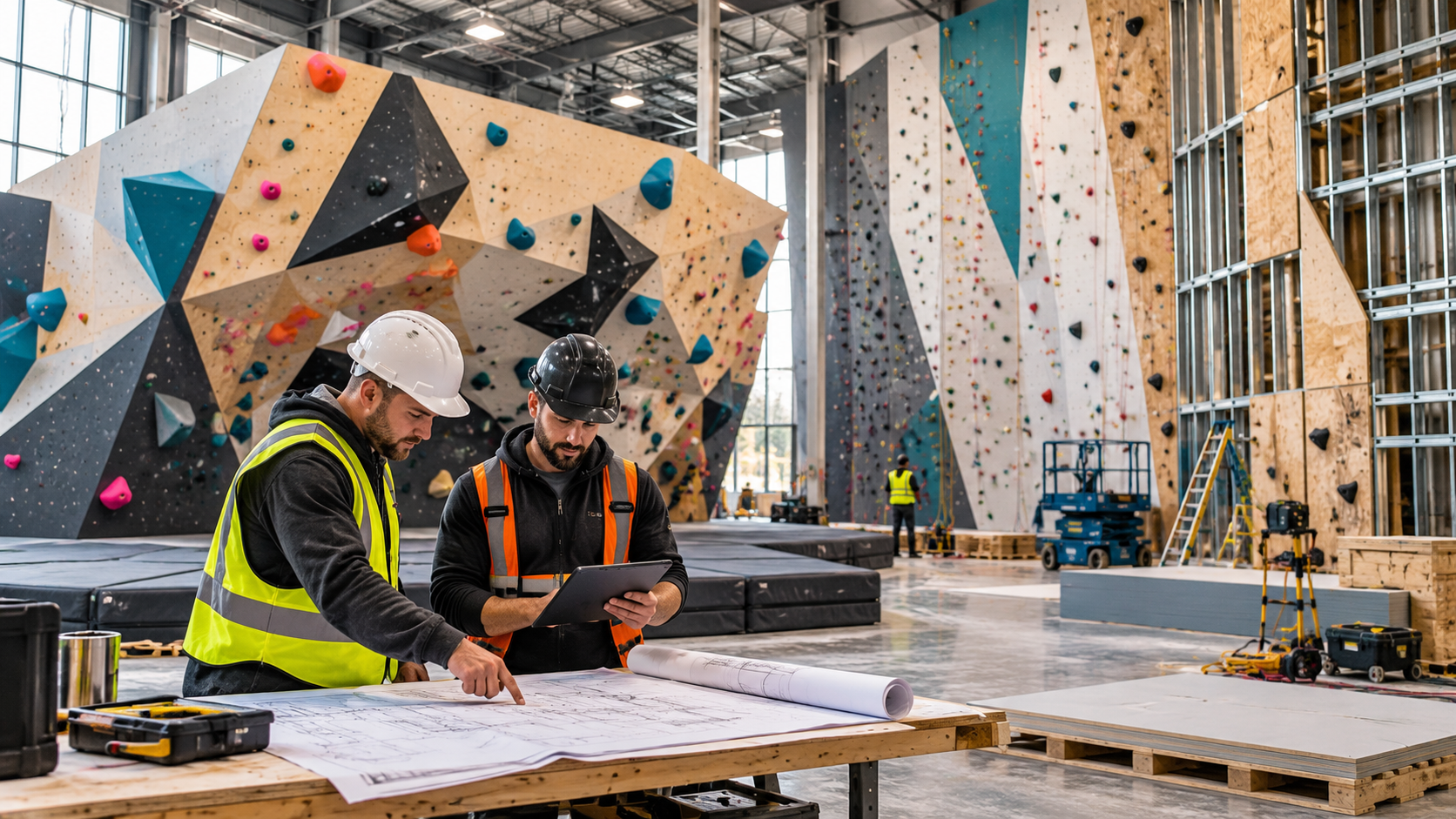
A commercial climbing gym in the US typically costs between $500,000 and $2 million to build. Where your project lands in that range depends on the size of the facility, the complexity of the walls, and whether you’re building bouldering only or a full multi-discipline space with rope climbing, training areas, and amenities.
That’s a wide spread, and for good reason. Most of the cost guides you’ll find online are published by software companies or financial modelling tools. They can give you ranges, but they can’t explain what actually moves the number, because they’ve never built a wall.
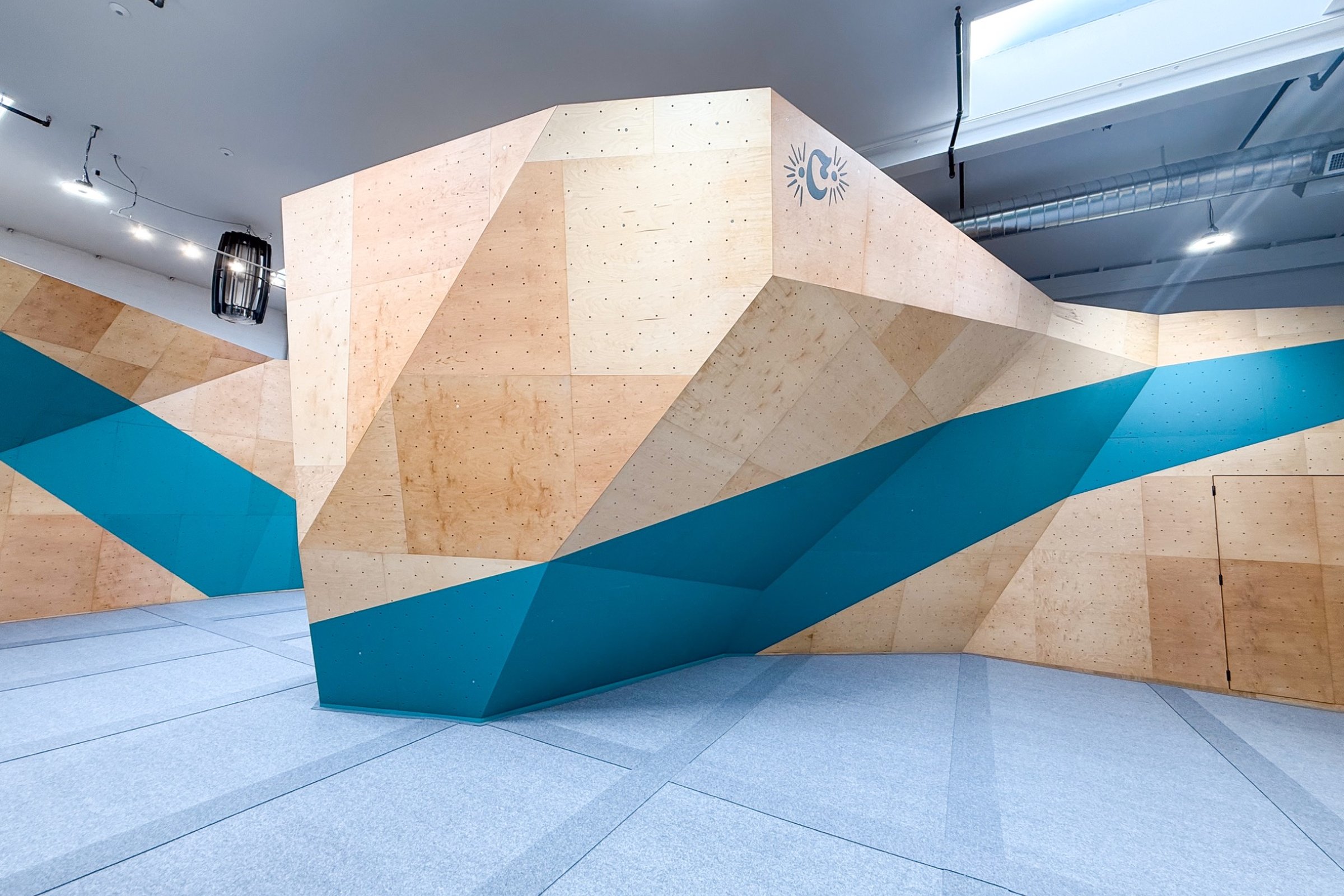
ICP has. Since 2009, ICP and its team have delivered around 70 custom climbing wall projects across four continents, including the California Climbing Collective in San Francisco. This guide breaks down climbing gym costs the way a builder sees them: by the decisions that shape your total project spend. Explore our custom climbing walls to see what ICP builds.
What Are the Biggest Cost Categories When Building a Climbing Gym?
Your total project budget divides into five major categories. Walls get the most attention, but the building itself and your working capital often consume more of the budget than you’d expect.
| Cost category | Typical US range | What drives the variance |
|---|---|---|
| Lease, site works, and building fit-out | $150,000 to $800,000+ | Location, ceiling height, structural condition, permit requirements |
| Climbing wall design, engineering, and installation | $60,000 to $600,000+ | Wall area (100 sqm / ~1,075 sq ft is a realistic small-gym starting footprint), geometry complexity, framing type, terrain variety |
| Safety matting | $25,000 to $60,000+ | Bouldering vs rope, fall zones, mat depth, custom cuts |
| Holds, volumes, route setting, and training boards | $40,000 to $120,000+ | Hold quantity and quality, volume range, training board integration |
| Working capital and pre-opening costs | $100,000 to $400,000+ | Staff hiring, marketing, insurance, three to six months of operating runway |
A bouldering-only facility at the smaller end can come in under $500,000 with disciplined planning. A full multi-discipline gym with rope climbing, bouldering, training areas, retail, and amenities in a larger space will push past $1.5 million.
The takeaway is that there’s no single “cost to build a climbing gym.” There’s your facility, your building, and the decisions you make early in design.
How Much Does a Commercial Climbing Wall Cost?
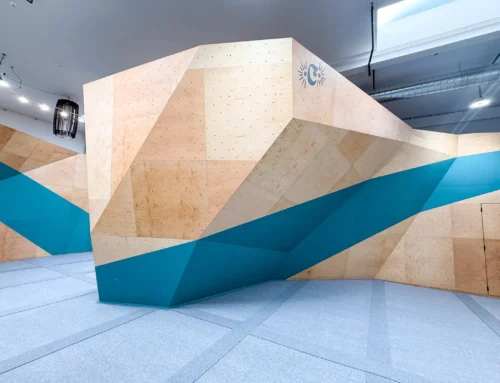
Climbing wall costs in the US vary significantly depending on wall area, geometry complexity, framing type, and how integrated the system is with matting and volumes. ICP’s entry point for climbing wall design, engineering, production, freight, and installation starts from around $60,000 for smaller projects (roughly 100 sqm / ~1,075 sq ft of climbing surface), scaling with wall area and complexity. Most commercial gyms start at around 250 sqm (~2,700 sq ft) of climbing surface, and larger or more complex facilities can reach well above $600,000.
The spread exists because a simple vertical plywood wall is a fundamentally different product from a sculpted, multi-angle wall with overhangs, aretes, and integrated volumes. The more complex the geometry, the more engineering goes into making it climbable, settable, and safe.
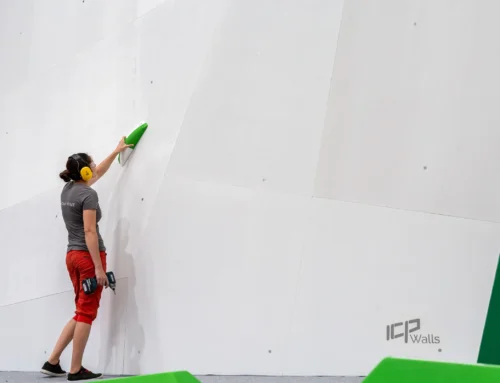
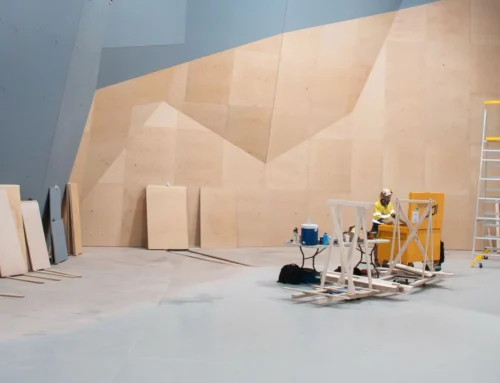
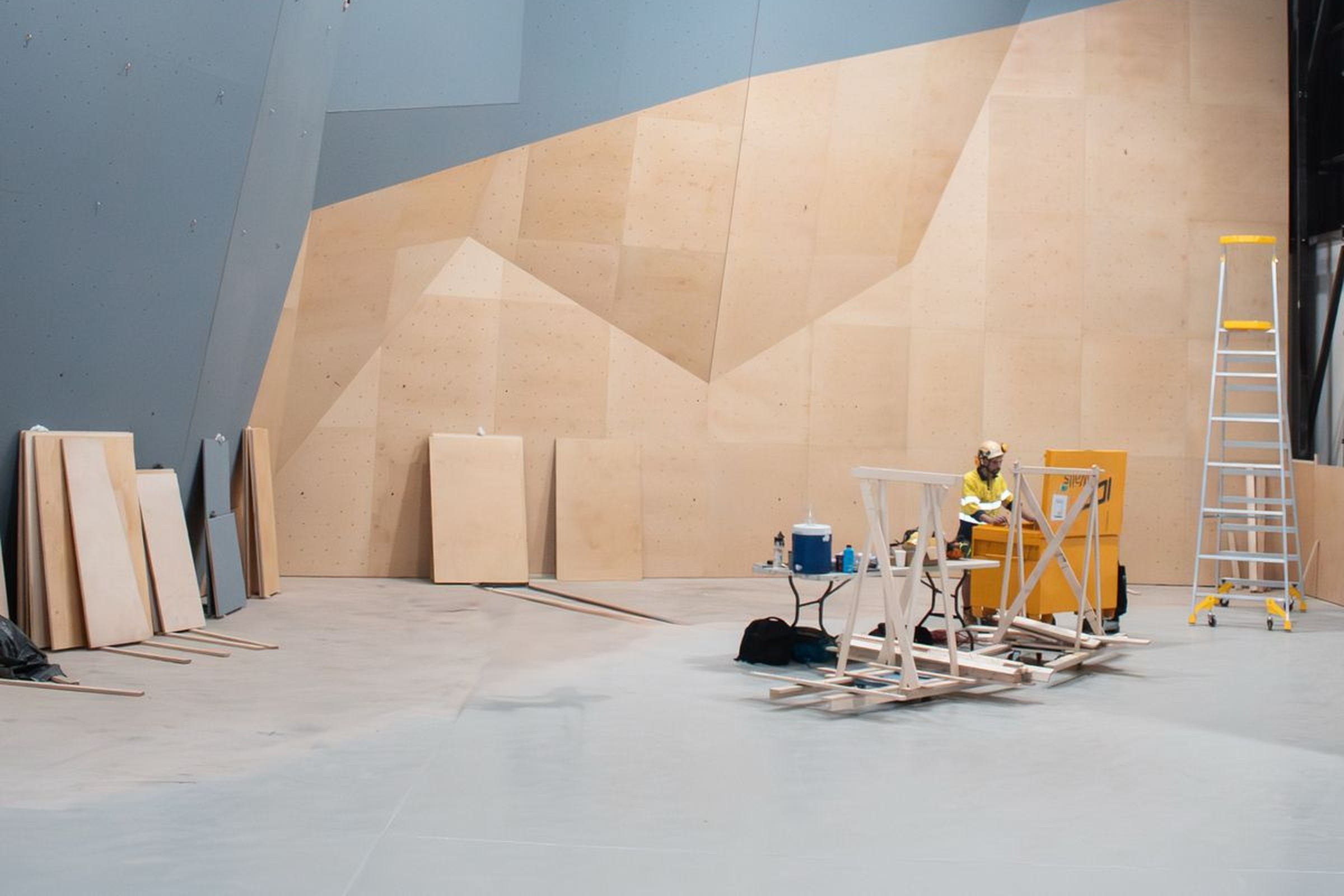
One factor most cost guides overlook is framing type. Most commercial climbing walls use steel framing, which typically requires specialist installers. ICP offers both steel-frame and wood-frame wall systems. Both are relocatable, but the wood-frame system is designed for ease of assembly by any qualified building professional, not just a specialist climbing wall crew. It’s one of only a handful of truly modular systems available worldwide. That can reduce installation cost, shorten your build timeline, and give you flexibility if your lease changes. See our guide to retrofitting and relocating climbing walls for more detail.
Is a Bouldering Gym Cheaper to Build Than a Rope Climbing Gym?
On build cost alone, not by much. Wall supply is close to apples to apples. The bigger savings come from the building you can use and the staff you need to run it.
Bouldering gyms require lower ceiling heights (typically 4.5 to 5 metres / ~15 to 16.5 feet), which means more buildings qualify and lease costs drop. You don’t need belay or auto-belay hardware. On the flip side, bouldering uses more holds and volumes per square metre than rope climbing, and bouldering mats are thicker and more expensive per square metre than rope mats.
Rope climbing adds some hardware (top-rope bars, lead anchor points) but uses fewer holds and cheaper matting. The real cost difference shows up on the operational side. A rope gym needs three or more staff on the floor at peak times to manage belay systems and safety, compared to just one for a bouldering facility. That ongoing staffing cost compounds month after month.
The rope climbing market is actually larger than bouldering, but the constraint is finding a building with enough ceiling height to make rope climbing work. That’s why many first-time gym owners start with bouldering: it’s faster to open, operationally simpler, and more buildings qualify.
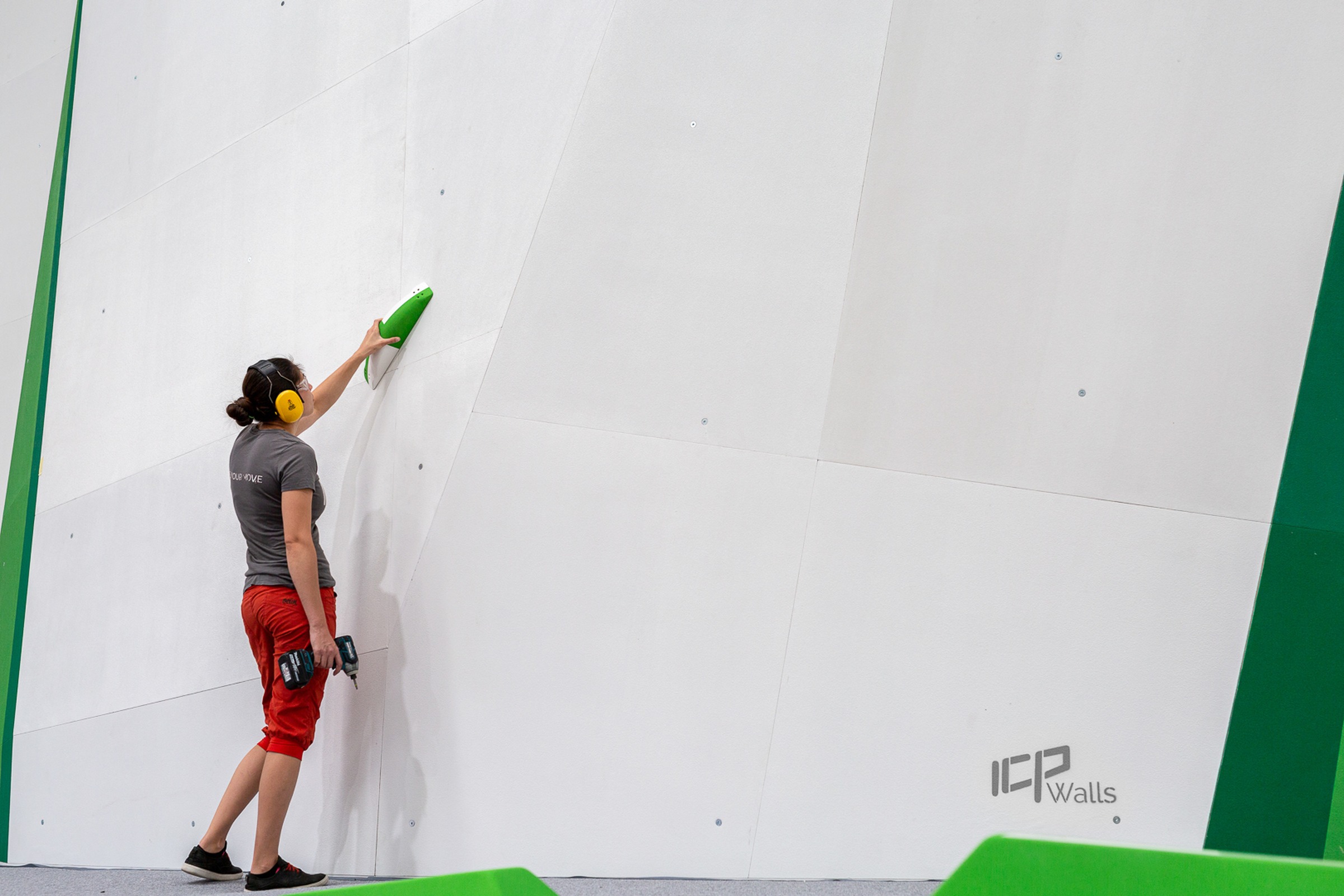
Both bouldering and roped gyms need regular route setting to keep the climbing experience fresh, with sections typically reset each week. Beyond changing holds and routes, the wall design can give setters more scope to vary the climbing experience. ICP Raps combines ICP walls with matching volumes that extend climbing surfaces across changes in wall angle. This allows setters to change the wall’s climbing profile and create new movement challenges without rebuilding the underlying structure.
What Does It Take to Open a Climbing Gym?
Building the physical facility is only part of starting a climbing gym. The operational side carries its own costs and complexity, and underestimating it is one of the most common reasons new gyms struggle in their first year.
Business planning and feasibility. Before committing capital, you need a clear picture of your market, your competitive landscape, and your financial projections. How many active climbers are within a realistic drive time? What do membership rates look like in your area? What’s the realistic ramp to break even? These questions need honest answers, not optimistic ones.
Site selection. Choosing the right building is the most underrated cost-saving decision in the entire process. A building with adequate ceiling height, structural capacity for wall loads, and minimal code compliance issues can save hundreds of thousands of dollars in leasehold costs. We cover what to look for in the infrastructure behind modern climbing gyms.
Permits and compliance. Permit requirements vary dramatically by municipality in the US. Some jurisdictions process climbing gym permits quickly. Others require extended review periods, specialist engineering sign-offs, or additional fire and accessibility assessments. Build permitting time into your timeline from day one.
Staffing and training. You’ll need front-desk staff, route setters, and potentially coaches and fitness staff before opening day. Hiring and training needs to happen during the build, not after it.
Working capital runway. New climbing gyms rarely reach stable cash flow in their first month. Industry experience suggests budgeting for three to six months of operating expenses as a cash reserve to cover rent, staff, insurance, utilities, and marketing. Running out of working capital during the ramp-up period forces operational compromises exactly when consistency matters most.
What Costs Do First-Time Gym Owners Underestimate?
From ICP’s experience across around 70 custom projects, three costs consistently catch first-time owners off guard.
Leasehold improvements and building compliance. The building you lease will almost certainly need work before you can install walls. Fire protection upgrades, bathroom fit-out, electrical capacity, HVAC, and accessibility compliance all add up. In the US, these costs vary dramatically by municipality. Leasehold improvements alone can run $100,000 to $400,000 before a single wall panel goes up. Choosing a building with the right structural bones saves more money than negotiating wall cost.
Multi-vendor coordination. When you source walls from one company, mats from another, holds from a third, and installation from a fourth, you inherit the coordination burden and the risk. Delays compound. Finger-pointing starts. Change orders multiply. A single provider that handles design, walls, commercial safety matting, holds, volumes, and installation as one integrated system removes that friction. It doesn’t always mean the cheapest quote per line item, but it typically means a lower total project cost because you avoid the blowouts that come from gaps between suppliers. ICP’s five questions to ask your climbing gym builder covers how to evaluate this.
Pre-opening marketing and membership sales. A gym that opens with zero awareness and zero pre-sales faces a brutal ramp-up. Investing in pre-opening marketing and founding membership campaigns during the build phase means revenue starts closer to day one.
How Long Does It Take to Build a Climbing Gym?
Most commercial climbing gym projects take 6 to 18 months from initial design concept to opening day. The timeline depends on building readiness, permit approvals, wall complexity, and how early you lock in design decisions.
The biggest timeline risk isn’t construction. It’s indecision. Projects that start wall design after the lease is signed, rather than before, typically face compressed timelines, cost pressure, and compromises that live with the facility for years. ICP’s approach is to start the design process early so your wall system, matting layout, and traffic flow are resolved before construction begins. That front-loaded clarity is what keeps projects on schedule.
How Can You Reduce Climbing Gym Construction Costs?
Reducing cost doesn’t mean cutting corners. It means making smarter decisions earlier.
Choose the right building first. A building with adequate ceiling height, structural capacity, and minimal code issues saves more than any discount on walls.
Consider wood-frame wall systems. ICP’s modular wood frame can be assembled by general building professionals, is fully relocatable, and is often lower in total installed cost than steel alternatives.
Design the full system together. When walls, mats, holds, and layout are designed as one integrated system, you avoid the rework, change orders, and coordination gaps that inflate multi-vendor projects.
Invest in future-proofing. ICP Rap and modular wall designs cost more upfront but drastically reduce long-term refresh and renovation expenses.
Get design clarity before committing capital. ICP offers pre-site concept design that defines priorities, tests assumptions, and creates a buildable pathway before you sign a lease or commit to a build. Start a conversation early, even if you’re six months from breaking ground.
For California-specific considerations, see our guide to climbing wall builders in California.
Ready to Scope Your Project?
Every climbing gym is different, and the right budget depends on your building, your market, and your vision. ICP works with gym owners from concept through to completed facility, covering walls, mats, holds, volumes, and installation under one roof. Get in touch to start your design process, or explore our completed projects to see what’s possible.
Frequently Asked Questions
How much does it cost to build a climbing gym in the US?
Most commercial climbing gyms cost between $500,000 and $2 million or more, depending on facility size, wall type, building condition, and whether you’re building bouldering-only or multi-discipline. ICP’s wall supply entry point starts from around $60,000 for smaller projects, scaling with wall area and complexity.
Is it cheaper to open a bouldering gym than a rope climbing gym?
On build cost alone, the difference is modest because wall supply is similar. The bigger savings come from the building (lower ceilings qualify more options) and staffing. Rope gyms need three or more staff at peak versus one for bouldering, which is the biggest ongoing cost difference.
What is the biggest hidden cost when building a climbing gym?
Leasehold improvements. Fire protection, electrical, HVAC, bathroom fit-out, and accessibility compliance in your leased building can cost $100,000 to $400,000 before wall installation begins. Choosing the right building is the most underrated cost-saving decision.
How long does it take to build a climbing gym?
Typically 6 to 18 months from initial design to opening day. The timeline depends on building readiness, permits, and how early wall design begins. Projects that resolve design before construction starts stay on schedule more reliably.
Can you relocate climbing walls if you change locations?
Both wood-frame and steel-frame systems from ICP are relocatable. The wood-frame system has the added advantage of being assembled by any qualified building professional, making it easier to relocate without specialist crews.
Who builds commercial climbing walls in the US?
Several companies operate in the US market. Since 2009, ICP and its team have delivered around 70 custom climbing wall projects across four continents, offering end-to-end design, manufacture, and installation from a European factory, covering walls, mats, holds, and volumes as a single integrated system. See ICP’s completed projects.