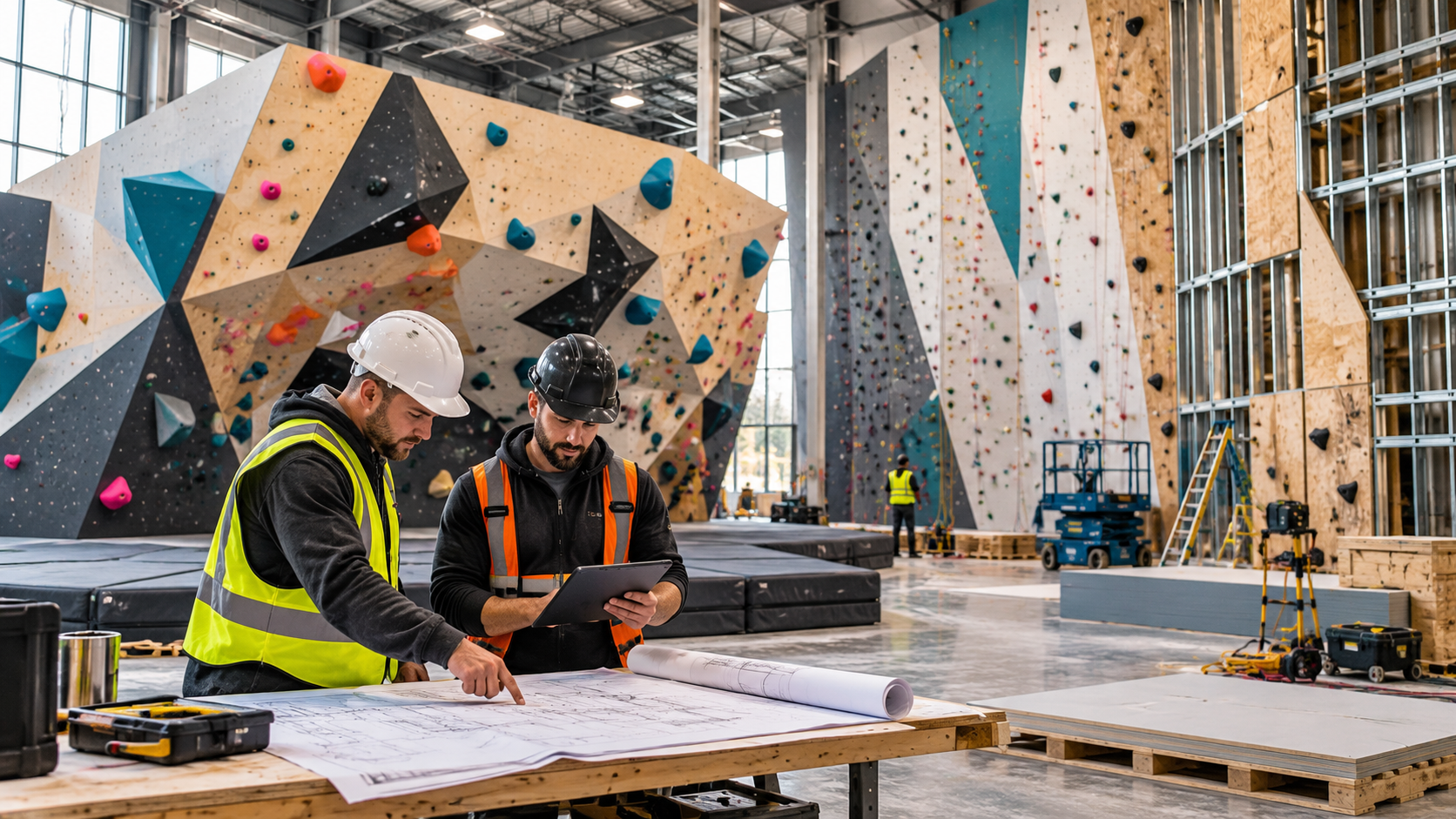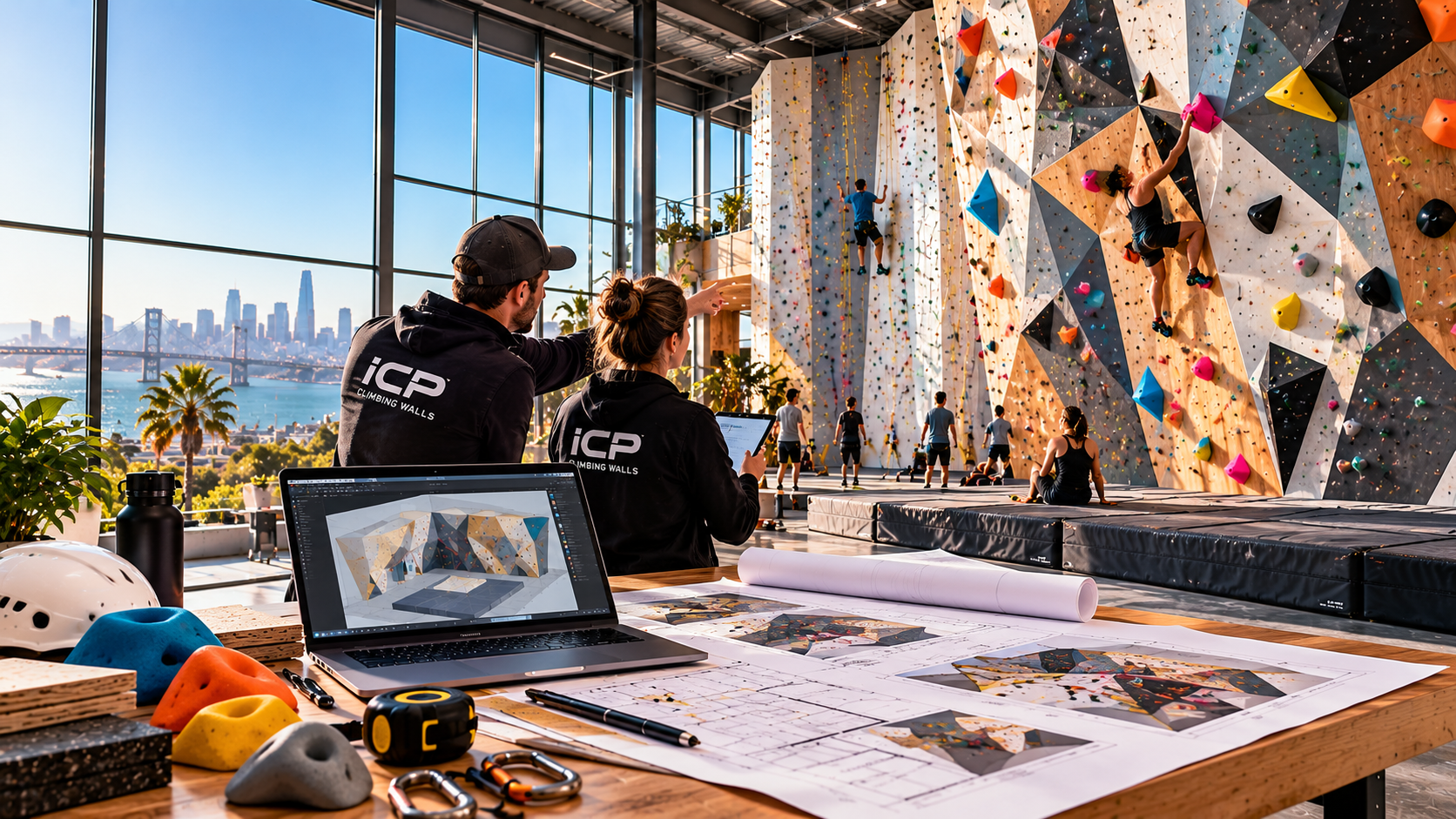
California has more climbing gyms than any other US state, and the market is still growing. Touchstone operates 18 facilities across the state. New independent gyms are opening from the Bay Area to Santa Barbara, and the demand for purpose-built, high-quality climbing walls has never been stronger.
If you’re planning a commercial climbing facility in California, choosing the right wall builder is one of the most consequential decisions you’ll make. The walls define the climbing experience, the setting possibilities, the safety profile, and the long-term adaptability of your gym.
ICP designs, manufactures, and installs custom climbing walls for commercial facilities worldwide. Founded in 2009, with a European factory and a design team headquartered in Australia, ICP and its team have delivered around 70 custom projects across four continents. Our first US build is right here in California: the California Climbing Collective in San Francisco.
Who Builds Commercial Climbing Walls in California?
Several climbing wall builders serve the California market, each with a different approach to design, fabrication, and installation. The right choice depends on the scope of what you need, the level of design collaboration you’re after, and whether you want a single provider or are comfortable coordinating multiple suppliers.
ICP brings an integrated model. Walls, safety matting, climbing volumes, holds, and installation all come from one team. That means one point of contact, one design process, and no coordination gaps between separate suppliers.
ICP is an Australian-founded company with a European factory and a growing US and Canadian presence, with the California Climbing Collective as the first completed North American project.
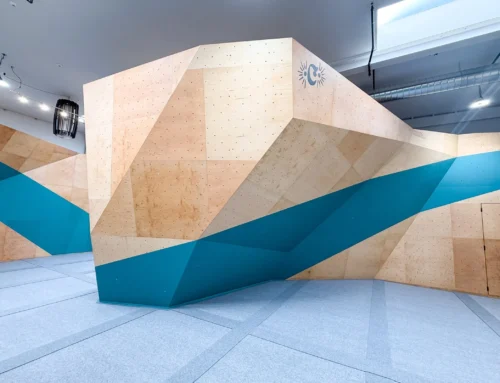
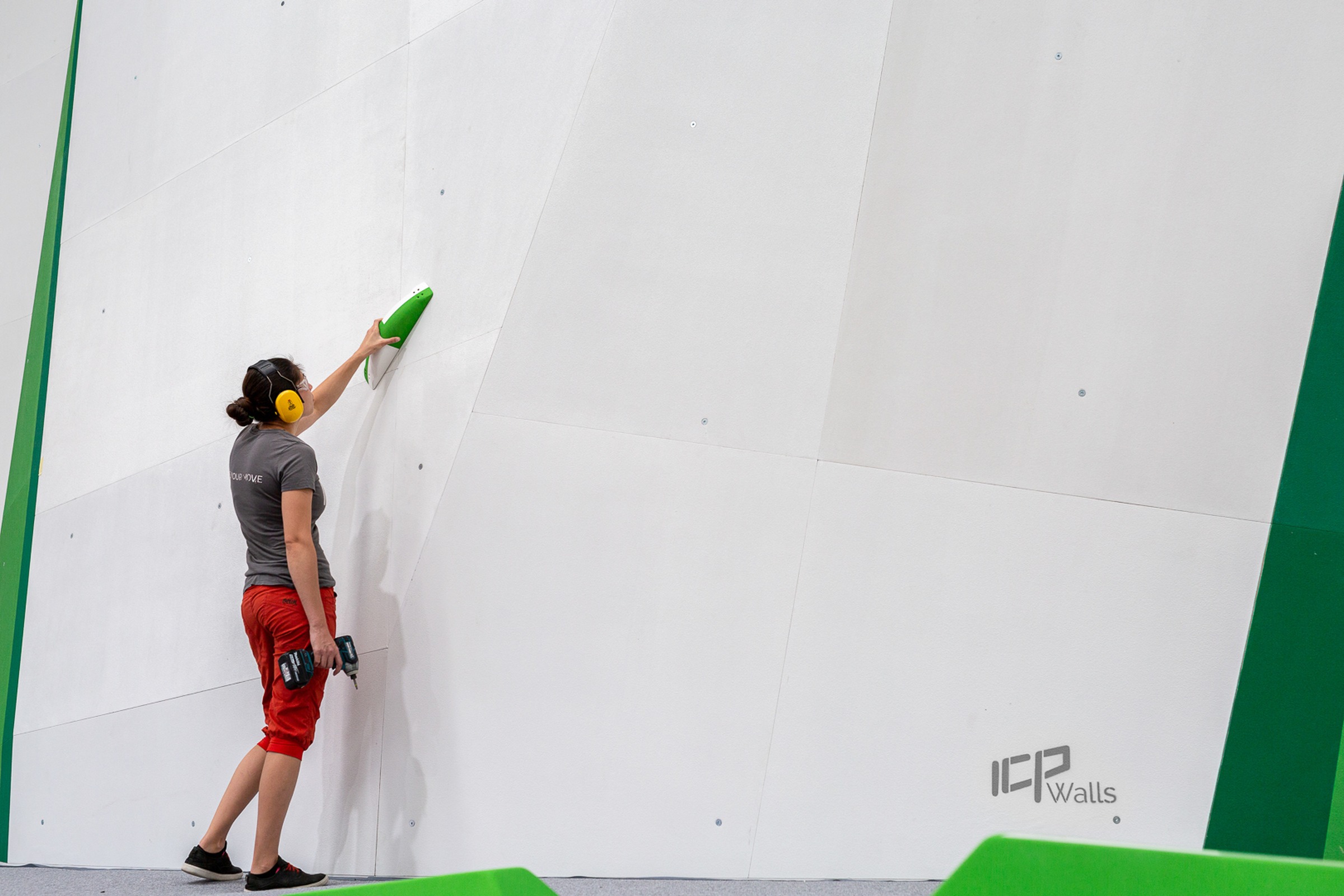
What sets ICP apart is the scope of what we deliver end to end, and the products built specifically for commercial gyms. ICP Raps combines walls and volumes with matching engineered angles, colour-graded so setters instantly know which volumes extend a given plane. Holds bolt across the join between wall and volume, giving setters more creative range than conventional systems.
ICP Rap is ICP’s interchangeable panel system, giving setters textured surfaces rather than only holds and volumes, so your walls can be refreshed without rebuilding the underlying structure.
What Should You Look for in a California Climbing Wall Builder?
The right builder for your project isn’t always the closest one or the cheapest quote. Five things matter more than geography or price alone.
Project experience you can verify. Ask to see completed facilities. Talk to the gym owner. A builder’s portfolio tells you more than their pitch deck. ICP’s completed projects span four continents and include the California Climbing Collective, so you can see our California work in detail on the project page.
End-to-end capability. When walls, mats, holds, volumes, and installation are handled by separate companies, you inherit the coordination risk. Delays from one supplier cascade into every other part of the project. A builder that handles the full scope reduces that risk and keeps your timeline intact. We go into this in more detail in five questions to ask your climbing gym builder.
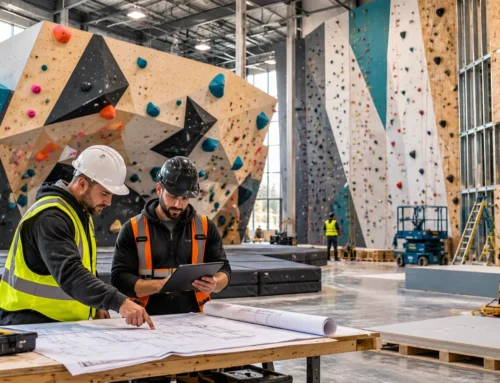
Design-led process. The best walls start with great design, not a catalogue selection. Your builder should work with you to understand your space, your climbers, your setting philosophy, and how the gym will evolve over time. ICP begins every project with a design process that resolves wall geometry, matting layout, traffic flow, and training areas before fabrication starts.
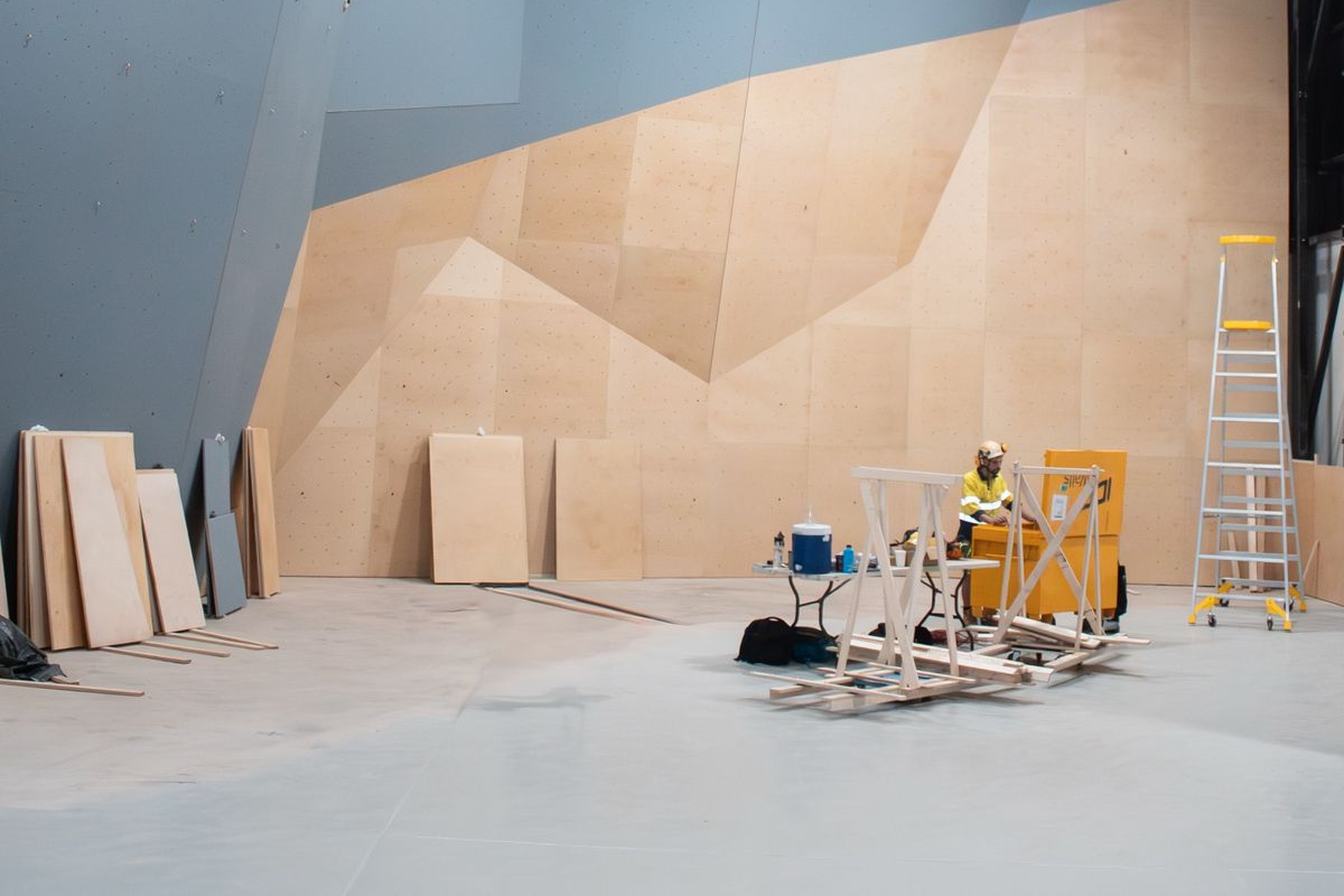
Framing flexibility. Most commercial climbing walls use steel framing, which typically requires specialist installers. ICP also offers wood-frame systems that can be assembled by any qualified building professional. Both steel and wood-frame systems are relocatable, but the wood frame is designed for ease of assembly by crews who aren’t climbing wall specialists. In California, where construction labour costs are among the highest in the country, that flexibility can make a real difference to your installed cost and your timeline.
Long-term adaptability. Static walls lose their appeal. Members leave when the climbing doesn’t change. ICP Rap uses interchangeable wall panels that let you refresh your climbing surfaces without rebuilding the underlying structure. It’s a higher specification at the outset, but it pays back over the life of the gym by keeping your walls fresh and your members engaged.
How Much Does It Cost to Build a Climbing Gym in California?
California construction costs sit at the higher end of the US range, driven primarily by labour rates and regulatory requirements rather than material costs. For a climbing gym specifically, total project costs in California typically range from $600,000 for a focused bouldering facility to well over $2 million for a full multi-discipline gym. The climbing walls themselves are only one part of that total.
California-specific factors that affect your budget include seismic compliance requirements, Title 24 energy code, higher permit fees in most municipalities, and generally longer approval timelines compared to other states. Choosing a building with the right structural bones and starting your wall design early both help control costs in this environment.
We’ve written a detailed breakdown of every cost category in how much it costs to build a climbing gym in the US. That guide covers what to budget for walls, matting, building fit-out, and pre-opening capital.
How Long Does It Take to Build a Climbing Gym in California?
Plan for 8 to 18 months from initial design to opening day. California’s permitting process is slower than many other states, so building that into your timeline from the start prevents surprises.
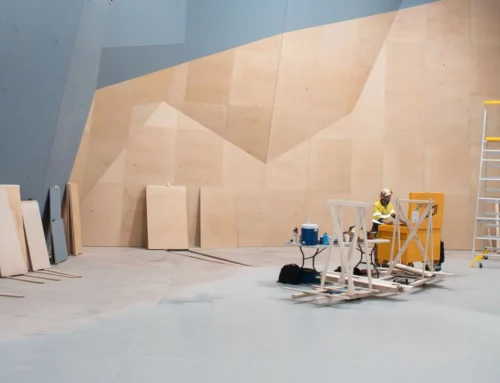
The wall design, fabrication, and installation phase typically runs 5 to 6 months once the design is finalised. ICP manufactures from its European factory, with shipping to West Coast ports. Starting the design and build process before your lease is signed or your construction team is locked in is the single most effective way to protect your timeline.
ICP in California: The California Climbing Collective
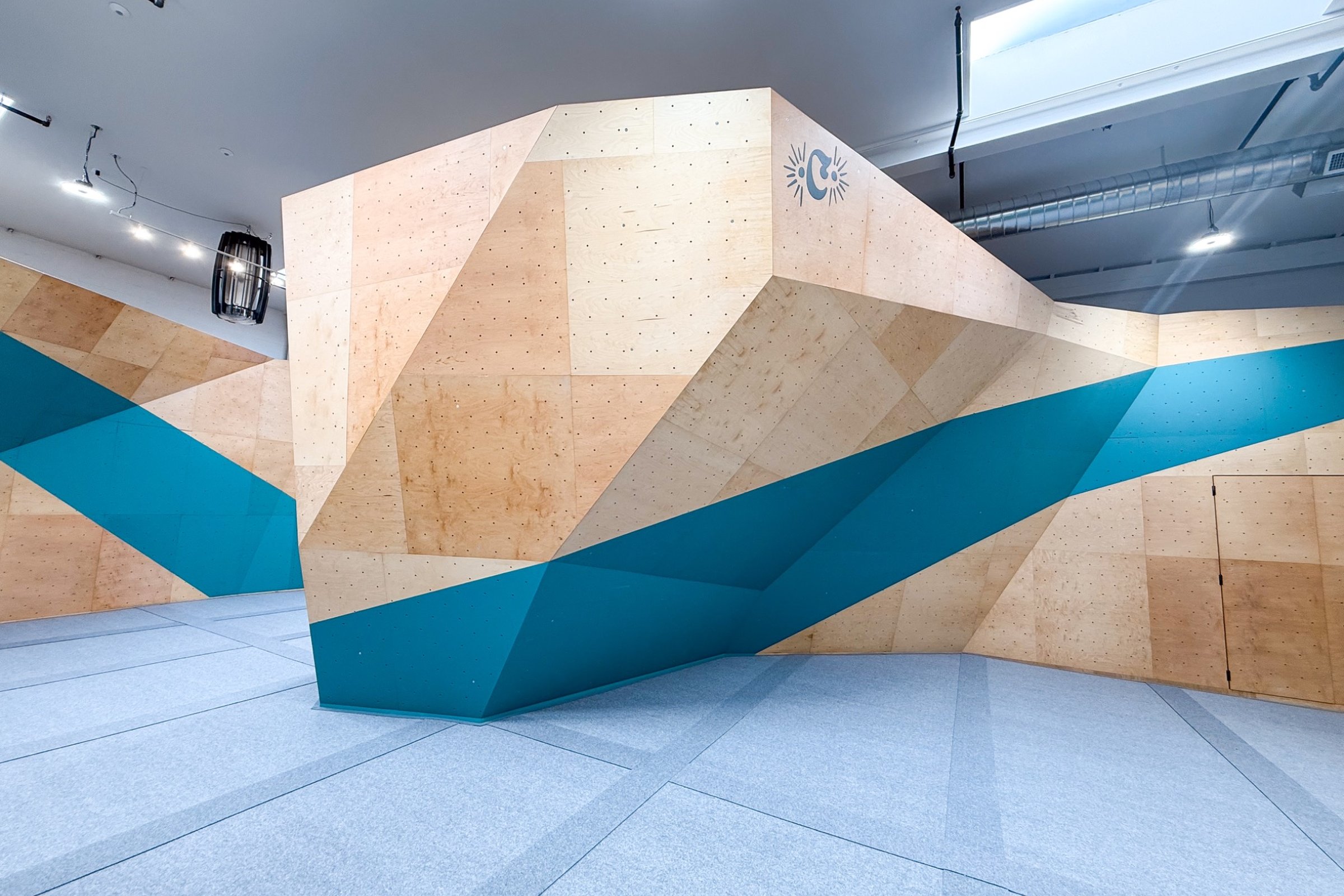
The California Climbing Collective (CCC) in San Francisco is ICP’s first completed US project and a detailed example of what the integrated model delivers.
Located in the SoMa district, CCC was developed by a client with deep route-setting and coaching experience who wanted a training-focused facility, not just another gym with walls. They approached ICP because they wanted a builder that would engage deeply with their vision.
The facility covers a 400 sqm (~4,300 sq ft) site with 370 sqm (~3,980 sq ft) of climbable surface and 210 sqm (~2,260 sq ft) of matted area. Wall heights reach 4.5 metres (~15 feet), with angles spanning slab to steep.
A shorter steep wall under the mezzanine houses a 7×10 Kilter system board, with a small slab wall alongside. Higher walls at the rear carry three auto-belay systems, designed so coaches can break a speed route into its three sections and train each separately.
CCC is where ICP Raps was installed for the first time anywhere in the United States. The system’s colour-graded, engineered angle matching between walls and volumes was designed specifically for the kind of training-focused setting this facility demands.
The Climbing Business Journal covered the project, noting ICP’s collaborative approach and the facility’s focus on helping climbers of all levels improve.
Start Your California Project
Whether you’re opening a new gym, expanding an existing one, or upgrading tired walls, ICP can help. We handle design, walls, matting, volumes, holds, and installation as one integrated project. Get in touch to start a conversation about your California facility, or explore our completed projects to see what we’ve built around the world.
Frequently Asked Questions
Who builds commercial climbing walls in California?
Several companies serve the California market with different approaches to design, fabrication, and installation. ICP, founded in 2009, offers end-to-end design, manufacture, and installation from a European factory, delivering walls, mats, holds, and volumes as one integrated system. ICP’s first US project, the California Climbing Collective in San Francisco, is a working example of this approach.
How much does it cost to build a climbing gym in California?
Total project costs in California typically range from $600,000 for a focused bouldering facility to over $2 million for a large multi-discipline gym. California costs are among the highest in the US due to labour rates, seismic requirements, and permitting. See our full US cost breakdown for details.
What makes ICP different from other climbing wall builders?
ICP delivers walls, safety matting, climbing volumes, holds, and installation as a single integrated system from one team. ICP also offers both wood-frame and steel-frame wall options, both relocatable. ICP Raps provides colour-graded, engineered angle matching between walls and volumes. ICP Rap is ICP’s interchangeable panel system for long-term wall adaptability.
How long does it take to build a climbing gym in California?
Plan for 8 to 18 months from design to opening. California’s permitting process is typically slower than other states. Starting wall design early, before construction begins, is the most effective way to protect your timeline.
What is the California Climbing Collective?
The California Climbing Collective is ICP’s first US project, located in San Francisco’s SoMa district. The facility features 370 sqm (~3,980 sq ft) of climbable surface across slab to steep angles, three auto-belay systems designed for coach-led speed training, a Kilter board, and the first US installation of ICP Raps. It was designed as a training-focused facility for climbers of all levels.
What wall systems does ICP offer for commercial gyms?
ICP offers both wood-frame and steel-frame wall systems, both relocatable. Wood frame is modular, lightweight, and installable by any building professional. ICP Rap provides interchangeable wall panels, and ICP Raps combines walls and volumes with engineered, colour-graded angles for more creative route setting.