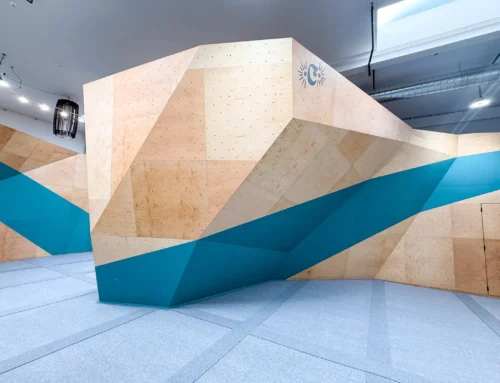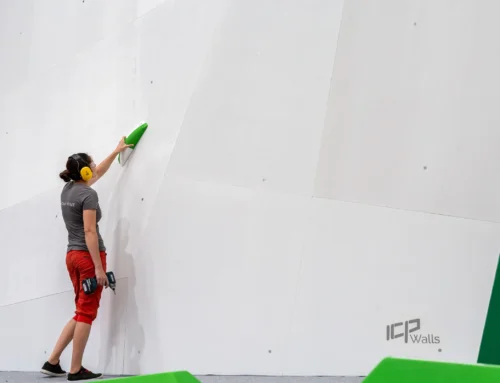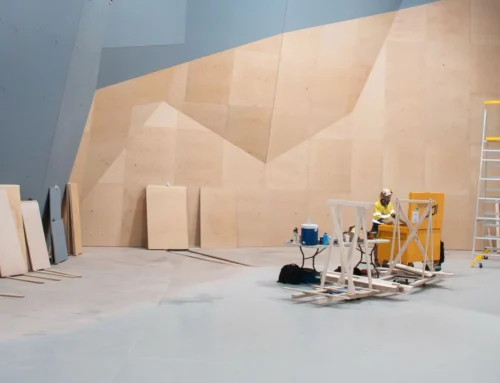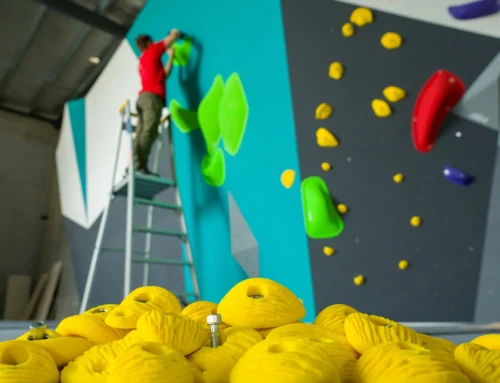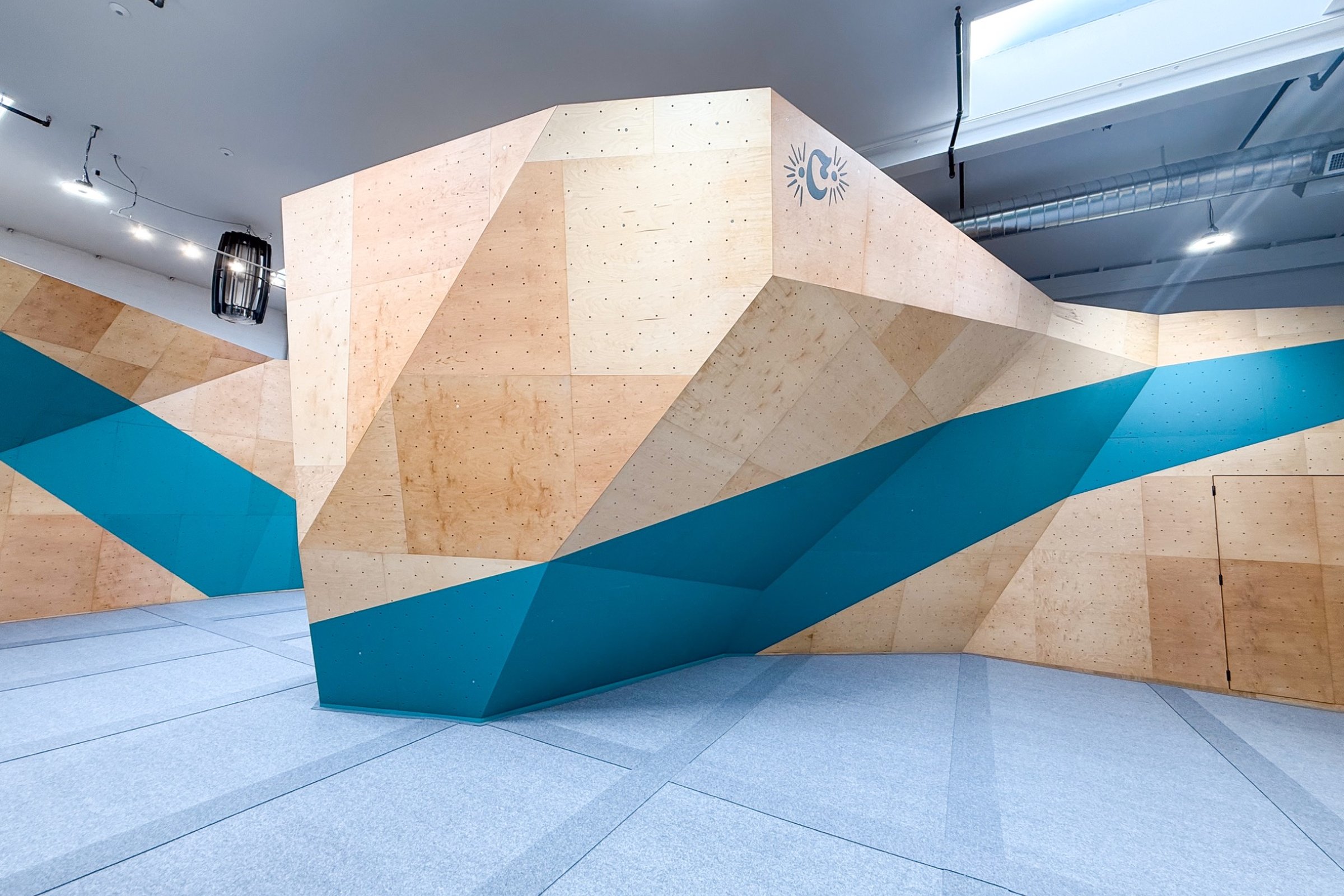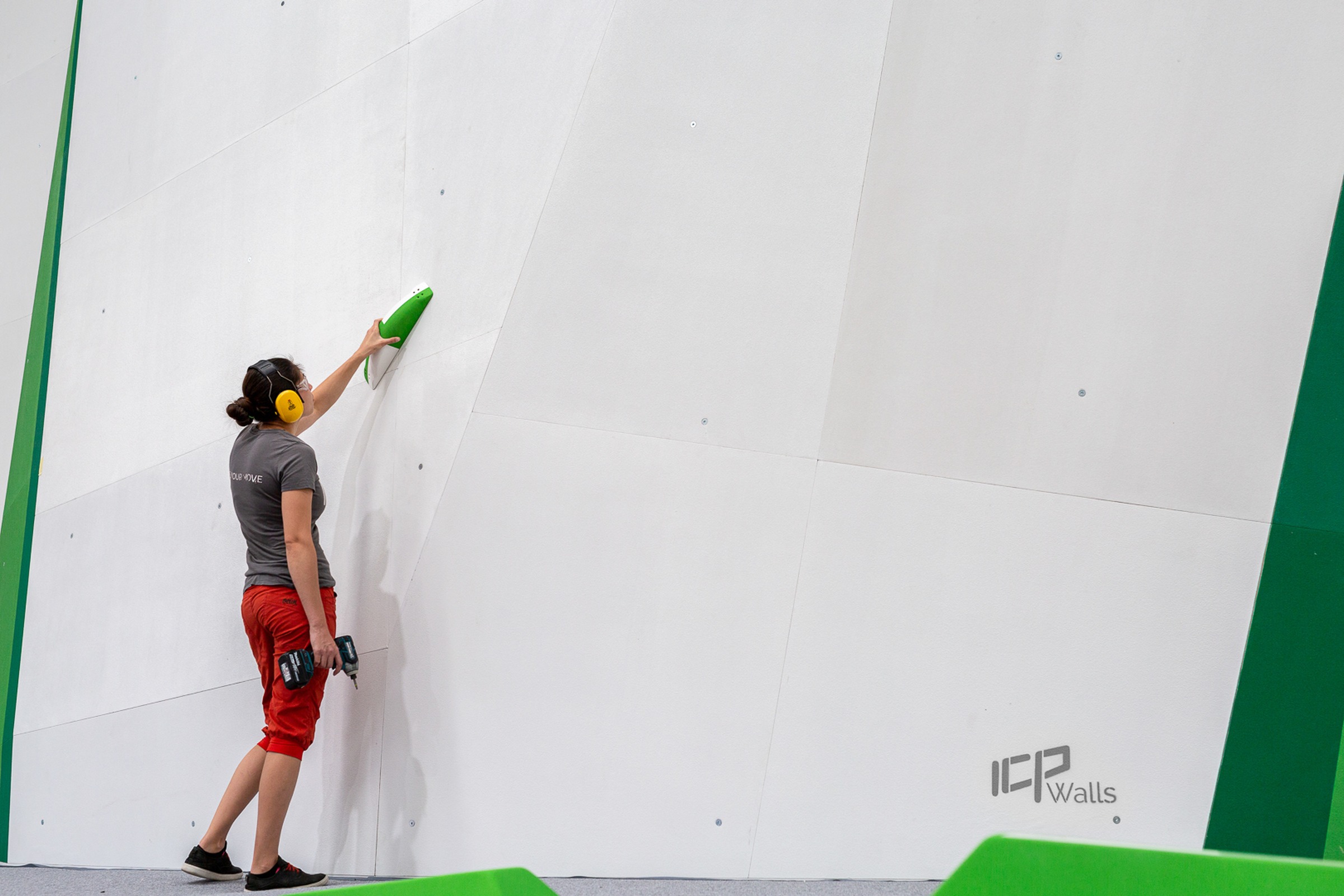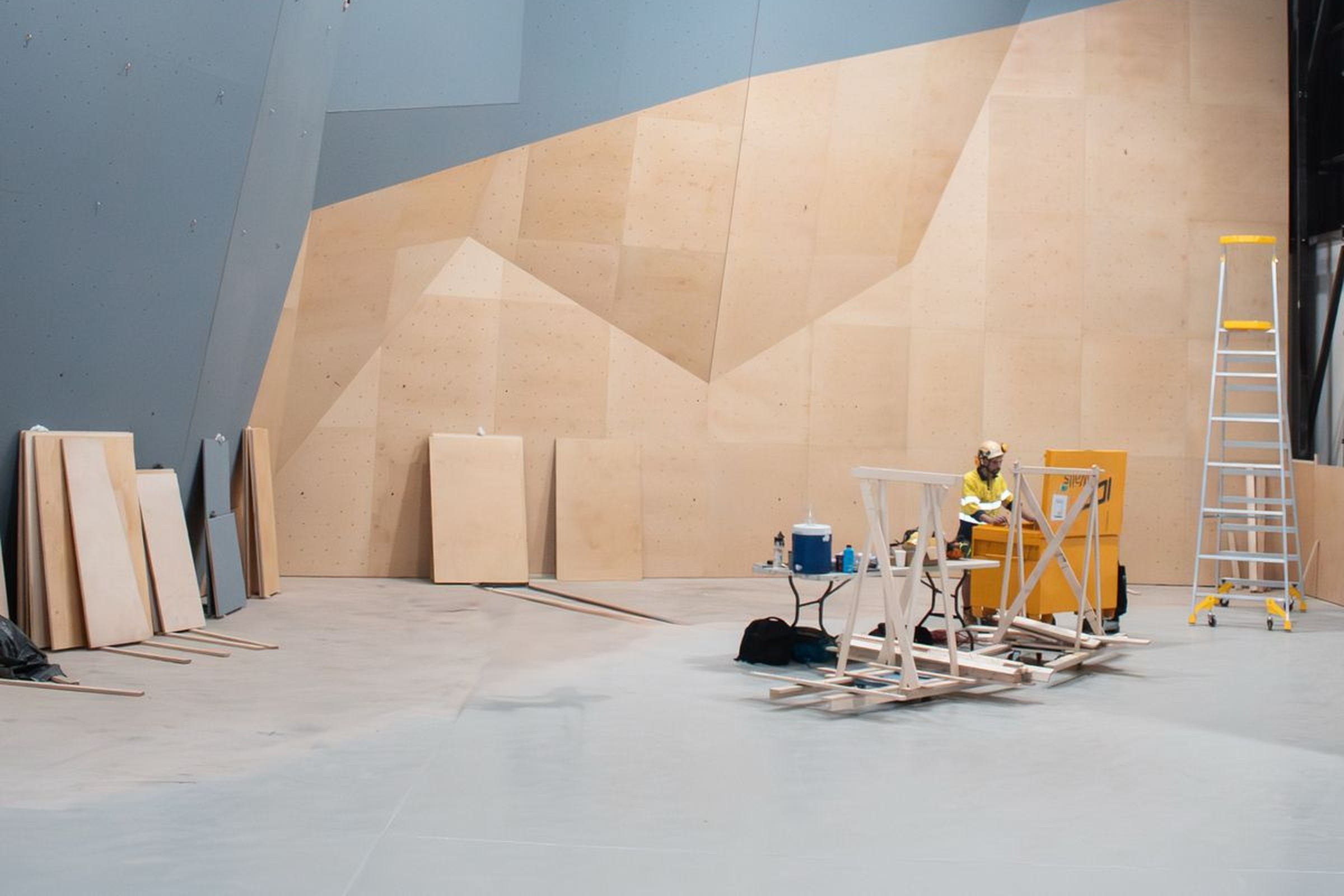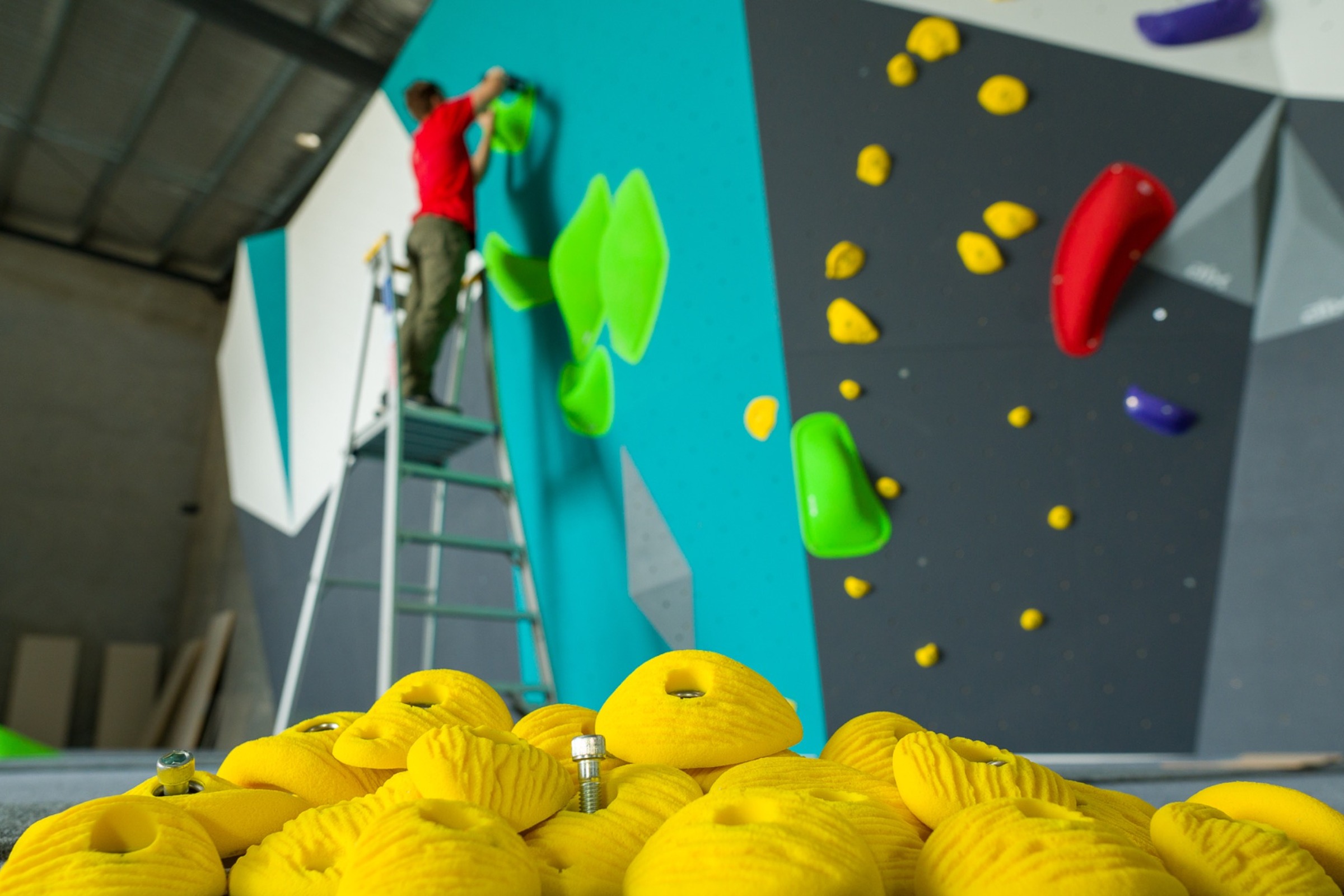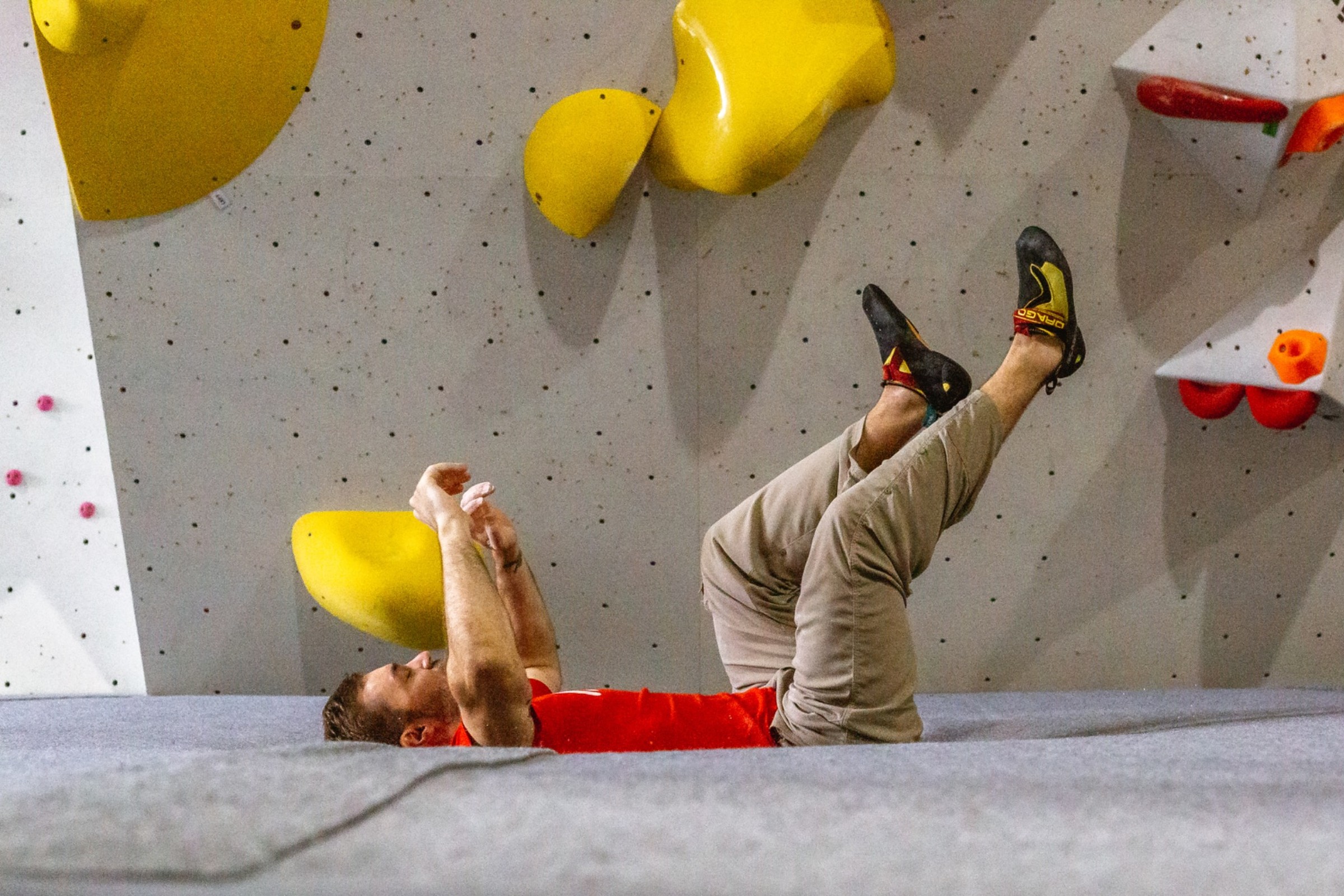
Picture a well-functioning climbing gym. Where climbers move with confidence. The environment handles unpredictable behaviour and high traffic without relying on constant staff intervention. Falls land where expected and supervision feels intuitive. This outcome emerges when routesetting, walls, matting, hardware, and your operation work in unison.
Safety in a commercial climbing gym is not a product category. It is a designed system. At ICP, safety is integrated at the design stage and setup to expand on over time, not added after installation. It is produced continuously through the interaction between materials, design decisions, and people. When these elements function in coherence, risk remains predictable and manageable, even as usage increases. The most effective safety decisions are made during climbing wall design, not just during post-install adjustments.
The real challenge in making a gym safe lies in identifying critical decisions with your wall builder in the early planning stages, while recognising that the effects of those decisions are not fully felt until the gym is operating at full capacity. Over the last decade, indoor climbing has evolved rapidly and in some countries standards have improved to accommodate larger commercial environments, but the fundamentals of safe climbing have not changed. In climbing, the climber’s decisions are primary. Rope systems and matting are engineered backups.
Compliance Is Baseline, Not Strategy
“Climbing is inherently dangerous” is often the starting point for technical safety discussions. Operators read equipment manuals, study standards, and collect anecdotal stories to gain more perspective. But at a certain point along the way, if mats and walls meet the standard, hardware is selected with thought towards lifetime, then the facility is considered “safe.”
Compliance is intended to establish a baseline, not a ceiling, and gyms almost always open compliant. Baseline compliance does not guarantee long-term safety under commercial load. System design and system evolution does. But when safety is treated as a product decision rather than an operational condition and traffic increases and routes evolve, the systems that looked sufficient on day one can become strained without deliberate review.
Materials will degrade. Foam will compress. Fixings will loosen. Usage patterns will shift. Maintenance, inspection, and timely replacement are not reactive measures they are structural components of the safety system itself.
A resilient facility is not one that simply passes inspection at opening. It is one designed to be easily maintained, reviewed, and evolved for years to come.

What Injury Data Actually Shows
Indoor climbing has relatively low injury rates compared to many participation sports. The majority of reported incidents are accounted for by bouldering gyms, largely due to the nature of falls. Roped climbing incidents occur less frequently and are more centred around user error. How risk works in a climbing environment is not intuitive. Viewed through a likelihood-versus-severity lens, bouldering and roped climbing present different profiles in a risk matrix. Bouldering incidents are more frequent, typically resulting from uncontrolled or asymmetric landings close to the ground, yet most are lower in severity.
This distinction matters. Risk is shaped not by frequency alone or worst-case scenarios in isolation, but by how design, behaviour, equipment, and supervision influence both likelihood and consequence over time. For example, auto belays pose a unique risk profile, having an adjustable belay gate (that which holds the clip-in point at ground level) is critical to safety as there is a pressure to help climbers remember to clip in. Reception sightlines and staffing are equally key in this scenario even where climbing should be at its simplest.
International standards reflect different cultural approaches to managing risk. European standards are typically prescriptive in construction and inspection requirements. North American frameworks place greater emphasis on operator responsibility, documentation, and training. In Australia, artificial climbing structure guidance evolved partly from public playground standards, emphasising predictable movement, fall attenuation, and material behaviour under load. ICP has contributed to the AS 2316 standard through Standards Australia, providing practical design and operational insight into how these requirements function in commercial environments.
What unites these approaches is the expectation of periodic review and maintenance. Annual inspections are not simply compliance events, they are structured opportunities to identify organic yet subtle changes in the system before they compound into risk.
Design Decisions That Change Risk
At ICP, safety is embedded from the earliest layout conversations. We work with clients, operators, and routesetters, while drawing on our own operational and routesetting experience to evaluate geometry, circulation, hardware, and matting as one interconnected system.
Wall angle, transitions, and feature placement shape fall trajectories and landing patterns. Volume positioning can increase lateral displacement. Circulation paths can intersect fall zones. During design, we consider how people climb and fall shaping fall zones to support predictable use under high traffic usage.
Safety matting, thought to be simple, is one of the most performance-sensitive components of a climbing facility. Increased durability does not automatically equate to improved safety and in many cases, materials optimised for longevity can compromise energy absorption and fall performance. Effective matting balances wear life with impact behaviour, supporting the system as a whole rather than masking its weaknesses. High quality materials and craftsmanship are at the core of efficient servicing and long term savings.
Many commercial gyms favour assisted-braking devices for top-rope systems because they reduce the severity of certain common belay errors, even though they introduce the opportunity for new and novel mistakes. Non-assisted devices remain effective when used by experienced belayers but rely more heavily on training and attentiveness. Controlled descent pulleys provide a more predictable behaviour while further reducing wear on ropes.
Staff visibility is a safety multiplier. Walls with clear sightlines allow fewer staff to supervise more climbers effectively. Complex layouts increase reliance on constant human intervention, which is why proper considerations must begin at the climbing wall design phase.
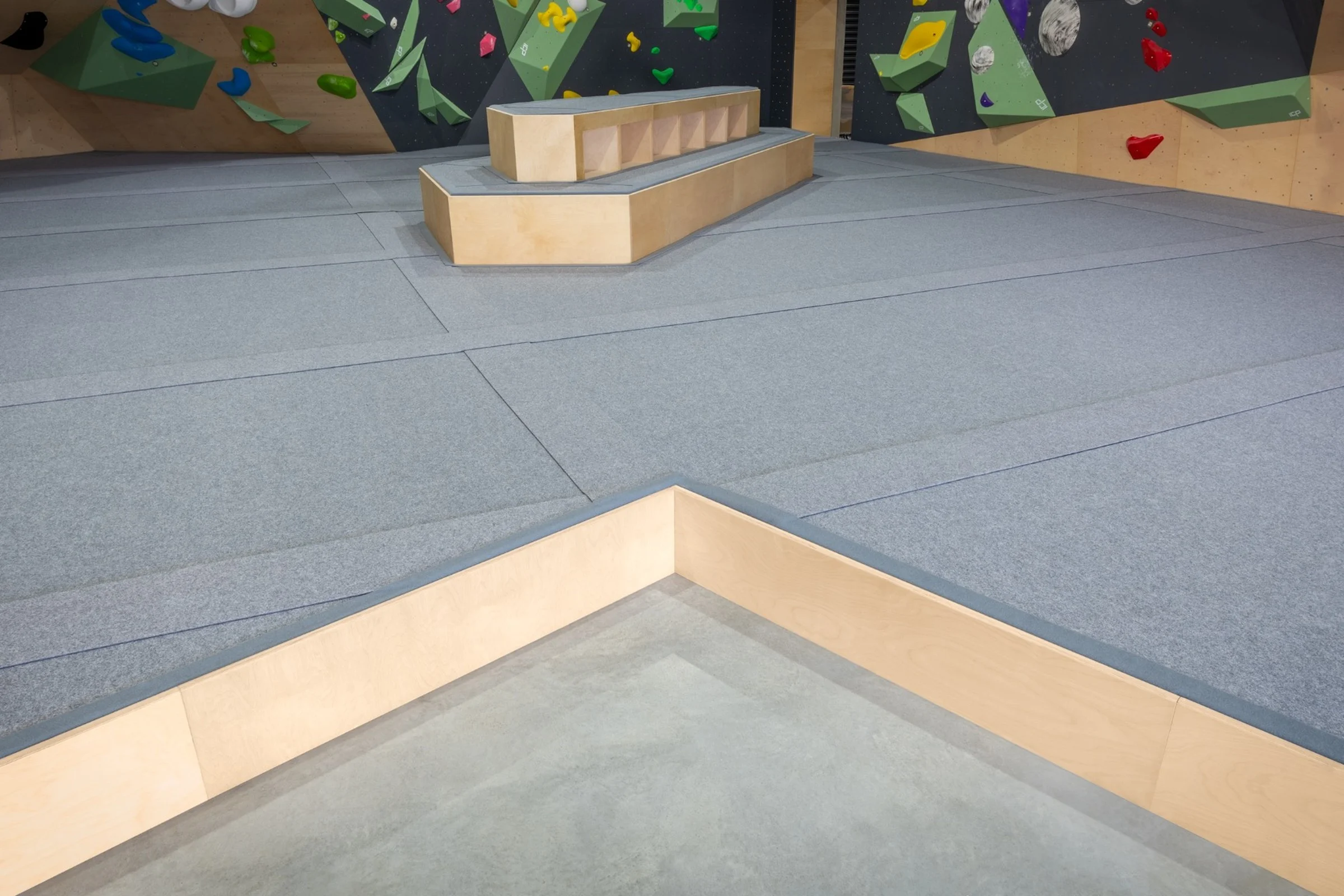
Safety as a System, Not a Product
When safety is treated as a designed outcome rather than a checklist, operational clarity increases and long-term risk decreases. Any vibrant climbing gym will be filled with climbers, setters, staff, non-climbers and spectators, groups, individuals, crowds, and often dogs (sometimes groups of dogs!), and all of these things are far more important to the success of a business than an extra few climbing stations. People recognise quality when they experience it, particularly when they feel consistently safe.
At ICP, safety is addressed through design and built to be used day after day. Mats, walls, routesetting and the spaces in between are developed together so that no one piece of the system is compensating for another. A safe gym is one where the environment quietly supports good decisions, soft catches and predictable outcomes time after time. Designed to build on safety.
If you are planning a new facility or reviewing an existing one, the next step is not always adding more equipment. It is reviewing the system. Our inspection and design teams assess climbing environments as integrated structures, not isolated components.